Monitor NYSE Stocks With AI: Multi-Agent Analysis & Research Signals
MarketRoom Team
Content Writer
Monitor NYSE Stocks With AI: Multi-Agent Analysis & Research Signals
When you're researching a company listed on the New York Stock Exchange, a single opinion rarely tells the whole story. A value investor may love a beaten-down industrial name, while a growth investor flags slowing revenue. A Fed analyst may see rate tailwinds fading, while a contrarian argues sentiment has swung too far. MarketRoom.ai brings those conflicting viewpoints together — and lets you monitor NYSE stocks with AI in a structured, transparent, and data-driven way.
Our platform runs every ticker through eight independent AI agents, each with its own analytical lens. The agents debate, surface disagreements, and converge on a final Buy/Hold/Sell research label — accompanied by a 12-month price target and a confidence score. The result is not a recommendation or a tip. It's a multi-perspective research output designed to help you think more rigorously about the stocks already on your radar.
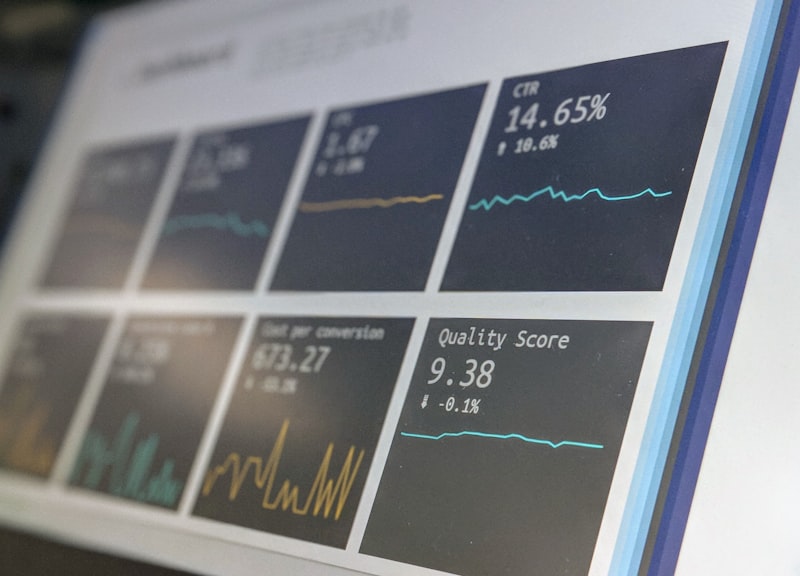
Featured image:

Why Investors Monitor NYSE Stocks With AI Instead of a Single Opinion
The NYSE is home to more than 2,400 companies, ranging from legacy financial institutions and industrials to consumer brands and energy giants. The sheer breadth of filings, earnings transcripts, macro data, and price action makes it nearly impossible for any single investor — or any single model — to consistently synthesize everything that matters.
MarketRoom.ai is built on a different premise: that better research comes from structured disagreement. Instead of relying on one monolithic AI to issue a verdict, we deploy specialized agents that each examine the same company through a distinct analytical framework. If you want to understand the mechanics behind how these agents collaborate and resolve conflicts, our deep dive on Multi-Agent AI Stock Consensus Explained: How AI Analyze Stocks walks through the entire workflow.
Key benefits of multi-agent NYSE analysis
- Diverse analytical lenses. Each of the eight agents — value investor, technologist, macro strategist, growth investor, Fed analyst, inflation monitor, accountant, and contrarian — contributes a different perspective. A bank stock may look attractive to the value agent, while the inflation monitor flags net interest margin pressure.
- Transparent disagreement. You don't just see a final label. You see where agents agree, where they diverge, and why. That visibility helps you stress-test your own thesis rather than blindly trusting a black box.
- Research labels, not advice. Buy/Hold/Sell verdicts are AI-generated research outputs, not personalized recommendations. They're meant to inform your own due diligence, not replace it.
- 12-month price targets and confidence scores. Every verdict is paired with a forward-looking target and a confidence level so you can gauge how strongly the agent consensus aligns. For context on interpreting these outputs, see our guide on Evaluating AI Price Target Accuracy: A Comprehensive Guide.
How MarketRoom.ai Helps You Monitor NYSE Stocks With AI
The workflow is designed to be simple for retail investors and finance enthusiasts, while remaining rigorous underneath. Here's how a typical analysis unfolds when you look up an NYSE-listed ticker.
1. Eight independent agents analyze the same company
Each agent receives the same dataset — SEC filings, earnings transcripts, balance sheet metrics, macro indicators, sector trends, and market price data — but applies a distinct framework. The accountant agent scrutinizes cash flow quality and off-balance-sheet items. The technologist agent evaluates competitive moats, R&D intensity, and platform leverage. The Fed analyst layers in rate path expectations, while the inflation monitor examines input-cost pressures and pricing power.
2. Agents debate and resolve disagreements
The agents don't work in isolation. They exchange findings, challenge each other's assumptions, and update their positions. A growth agent may initially favor a high-momentum consumer name, but revise its stance after the accountant agent surfaces deteriorating working capital. This adversarial debate is what makes the output more robust than a single-pass AI summary.
3. A final research verdict emerges
Once the debate converges, MarketRoom.ai produces a consolidated research output: a Buy/Hold/Sell label, a 12-month price target, and a confidence score. These are informational signals — descriptions of how the platform's models interpret the data — not directives to trade.
4. You dig into the reasoning
For every ticker, you can explore which agents agreed, which dissented, and what evidence drove the final call. That layer of explainability is what separates genuine research from a headline rating. If you're focused on specific sectors, such as software or semiconductors, our AI Stock Screening for Tech Stocks: A Comprehensive Guide covers how to filter and prioritize names using AI-driven signals.
What Sets Multi-Agent AI Apart From Traditional Screeners
Legacy stock screeners filter on static metrics — P/E ratio, dividend yield, sector classification. That's useful, but it doesn't capture the dynamic interplay between fundamentals, macro conditions, and narrative. MarketRoom.ai goes further by modeling how different investment philosophies would view the same security.
Consider an NYSE-listed industrial conglomerate. A traditional screener might flag it as "cheap" on trailing earnings. But the contrarian agent may note crowded positioning, the macro strategist may warn of a slowing global PMI cycle, and the accountant may flag one-time gains distorting headline EPS. Suddenly that "cheap" name looks more nuanced. Multi-agent AI surfaces those nuances instead of burying them.
Designed for US-market investors
The platform is tuned for US-listed equities, with an emphasis on NYSE and NASDAQ names, including S&P 500 constituents. Whether you're researching a mega-cap financial, a mid-cap energy producer, or a consumer staple, the agent debate is calibrated to the reporting standards, macro backdrop, and sector dynamics that shape US markets.
FAQ: Monitoring NYSE Stocks With AI
Is the Buy/Hold/Sell verdict a recommendation to trade?
No. The Buy/Hold/Sell label is an AI-generated research output that summarizes how the platform's eight agents interpret the available data. It is not investment advice, a personalized recommendation, or a solicitation to buy or sell any security.
How accurate are the 12-month price targets?
Price targets are model-driven estimates based on historical data, fundamentals, and macro inputs. They are inherently uncertain and may be materially wrong. Our guide on Evaluating AI Price Target Accuracy: A Comprehensive Guide discusses how to interpret them responsibly and compare against realized outcomes.
Can I monitor any NYSE-listed stock?
Most actively traded NYSE tickers are available for analysis. Coverage emphasizes US-listed equities, including large-cap and mid-cap names across financials, industrials, consumer, energy, healthcare, and materials sectors.
What data do the AI agents use?
Agents draw on SEC filings, earnings call transcripts, balance sheet and income statement metrics, macroeconomic indicators, sector data, and market price history. Each agent applies its own framework to that shared dataset.
How is this different from a traditional analyst rating?
Traditional analyst ratings typically reflect a single firm's view. MarketRoom.ai simulates multiple, competing investment philosophies and exposes where they agree and disagree — giving you a richer, more transparent research layer.
Start Your NYSE Research With MarketRoom.ai
If you want to monitor NYSE stocks with AI that thinks in competing perspectives rather than single verdicts, MarketRoom.ai gives you a structured way to do it. Run a ticker through eight independent agents, read the debate, review the final research label, and use those signals as one input in your own due diligence — not as a substitute for it.
Ready to see how multi-agent analysis works on a name you follow? Try MarketRoom.ai free and explore the agent debate for yourself.
Disclaimer — Not Investment Advice. The content on this page is provided for informational and educational purposes only. It does not constitute investment advice, financial advice, a recommendation to buy, sell, or hold any security, or a solicitation or offer to invest. MarketRoom is not a registered investment adviser or broker-dealer. AI-generated analysis reflects data and model outputs only and may be inaccurate, incomplete, or outdated. Past performance and AI-generated signals do not guarantee future results. All investments carry risk, including the potential loss of principal. Always do your own research and consult a licensed financial advisor before making any investment decision. By reading this content you agree to our Terms of Service, Privacy Policy, and Risk Disclaimer.
Important Disclaimer
Not investment advice. All content published on MarketRoom — including AI-generated analyses, verdicts, price targets, and articles — is provided for informational and educational purposes only. Nothing here constitutes a solicitation, recommendation, or offer to buy or sell any security.
Past performance is not indicative of future results. AI models may be incorrect, incomplete, or subject to data limitations. Always conduct your own research and consult a qualified financial advisor before making any investment decisions.
MarketRoom is intended for users aged 18 and older. By using this platform you confirm you meet the legal age requirement in your jurisdiction and agree to our Terms of Service, Privacy Policy, and Cookie Policy.